Futurion
 · Maria Kovaleva · Articles · 2 min read
Reproductive revolution: the dawn of the artificial womb era
Chinese company Kaiwa Technology claims to be developing a humanoid robot with an artificial womb capable of gestating a complete foetus. We analyse the project, its technical foundations, scientific criticism and the ethical implications of this technology.
What is the Kaiwa project?
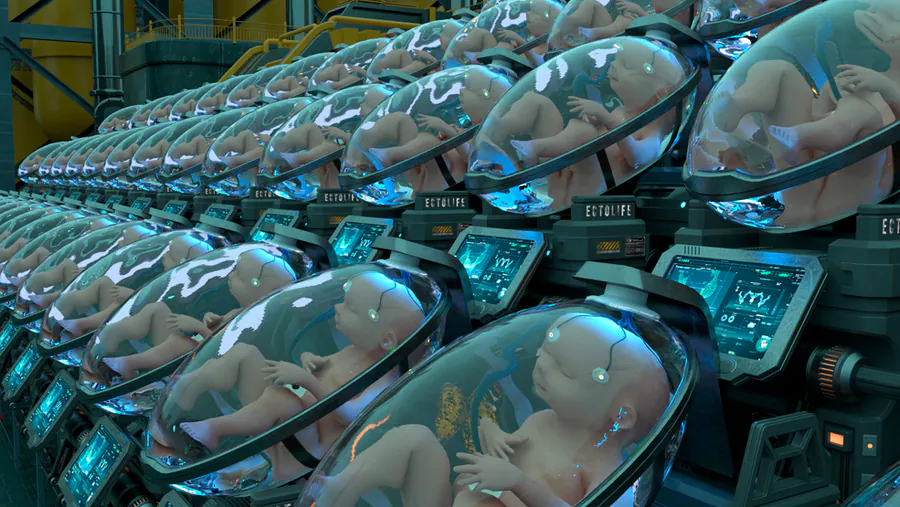
Kaiwa Technology is a Chinese company, headquartered in Guangzhou, that claims to be developing a humanoid robot with a built-in artificial womb.
According to the company, this “womb-robot” would allow a foetus to be gestated from conception through to birth — that is, to completely replace natural human pregnancy.
The estimated cost of this device is 100,000 yuan (approximately 14,000 US dollars).
Kaiwa states that a prototype could be ready by 2026.
🧪 Ideas and technical foundations
The robot would contain artificial amniotic fluid, nutrient channels and systems that mimic maternal support during gestation.
The greatest scientific challenges are: embryo implantation, hormonal regulation, immune response and mother-foetus synchronisation — aspects that Kaiwa has not detailed how it plans to resolve.
The project is compared to earlier studies such as EXTEND, in which premature lambs were kept alive in external “bio-bags”.
⚠️ Criticism and scepticism
Many experts consider the story of the “pregnant robot” to be an exaggeration or even false.
The credibility of the alleged creator, Dr Zhang Qifeng, is called into question, as he does not appear as a graduate of NTU, the university mentioned in initial reports.
The project raises ethical and social questions: who has the right to motherhood? How is birth defined? What are the consequences of raising a baby without human contact?
🔍 Why is this project so striking?
Kaiwa combines AI, biotechnology and robotics for an extremely futuristic application.
Although the project may be more marketing than real science, it has placed important debates about the future of human reproduction firmly on the table.
Valencia is a leader in healthcare innovation and quality of life. If you want to enjoy everything it has to offer, find out how we can help with Retirement in Spain or the Longevity Experience.