Futurion
· Maria Kovaleva · Articles · 3 min read
Can the gut influence how we age?
With age, the microbiome changes. Can its state influence the way we age? What current research says about the gut and longevity.
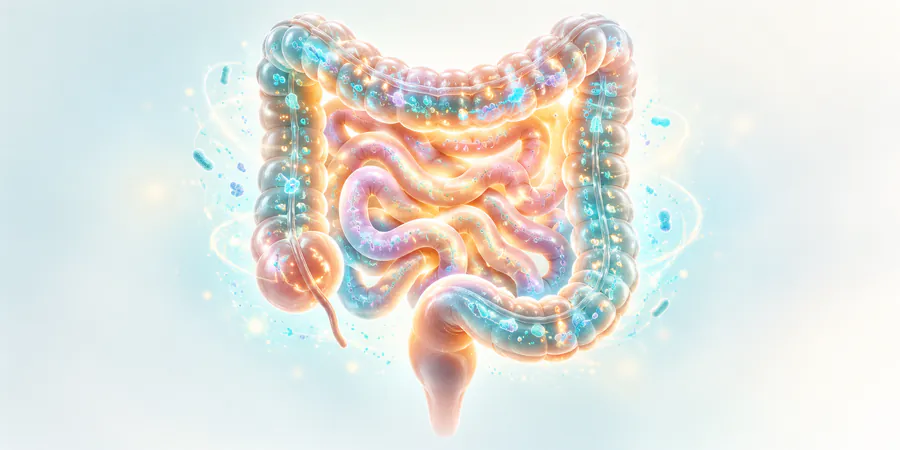
Trillions of microorganisms live in our gut. Together they form the microbiome, a complex ecosystem involved in digestion, metabolism, the immune system and the production of numerous biologically active substances.
With age, the microbiome changes. But the question that interests researchers most today is a different one: can its state influence the way we age?
What happens to the microbiome with age
In older people, the microbiome tends to become less stable and more sensitive to factors such as diet, medication, chronic diseases and level of physical activity.
Some studies have observed that people who age while remaining in good health more often show certain microbial profiles. Some bacteria, such as Akkermansia, Butyricimonas and Odoribacter, have been linked to healthy ageing.
But it is worth being precise: an association does not prove that these bacteria are the cause of greater longevity.
Why gut bacteria may influence ageing
Gut microorganisms produce numerous substances that interact with our body.
Among the most studied are short-chain fatty acids, such as butyrate. These molecules help maintain the intestinal barrier and regulate the immune response and inflammation.
Because ageing is often accompanied by an increase in chronic low-grade inflammation, scientists are investigating whether certain changes in the microbiome may intensify or reduce this process.
Is there a “longevity microbiome”?
Not for now.
It is true that interesting patterns have been found in very long-lived people, but the microbiome depends on many factors:
- country and environment;
- diet;
- lifestyle;
- medication;
- general state of health.
For this reason, the idea that there is a universal combination of “longevity bacteria” is too simplistic.
Current research is paying increasing attention to the diversity, stability and function of the gut ecosystem as a whole.
What we can do today
The best-supported strategies are still fairly simple:
- maintain a varied diet;
- eat enough fibre;
- include a range of plant-based foods;
- do physical activity regularly;
- avoid unnecessary use of antibiotics;
- look after metabolic health.
Diet and lifestyle can change both the composition and the activity of the microbiome.
What about probiotics?
Here the answer is more complex.
Probiotics and prebiotics can modify certain bacterial populations, and some studies show positive effects in older people.
However, we still cannot say that there is a universal probiotic capable of “rejuvenating” the microbiome or slowing ageing.
The effect depends on factors such as the strains used, diet and each person’s starting condition.
Could the microbiome be “rejuvenated” in the future?
This is a very active line of research.
Currently, the following are being studied:
- personalised nutrition;
- combinations of probiotics and prebiotics;
- postbiotics;
- targeted interventions on the gut microbiota.
Some of these approaches are promising, but they are not yet part of a standard anti-ageing therapy.
The most important point
The relationship between the microbiome and ageing seems increasingly relevant, but it has not yet been shown that modifying the microbiome on its own can extend human life.
The most rigorous way to put it today would be:
a healthy microbiome probably forms part of healthy ageing, but it is not a “secret of longevity” in itself.
And that is precisely where its interest lies: many of the factors that help maintain a balanced microbiome — good nutrition, movement and an active lifestyle — are also fundamental pillars of health at any age.